This article may contain affiliate links. If you buy through them we may earn a commission at no extra cost to you.
Memory foam wins on pressure relief and motion isolation; springs win on cooling and responsiveness. The decision comes down to three things: how you sleep, how hot you run, and whether you share the bed. Everything else is secondary.
How Memory Foam Mattresses Work
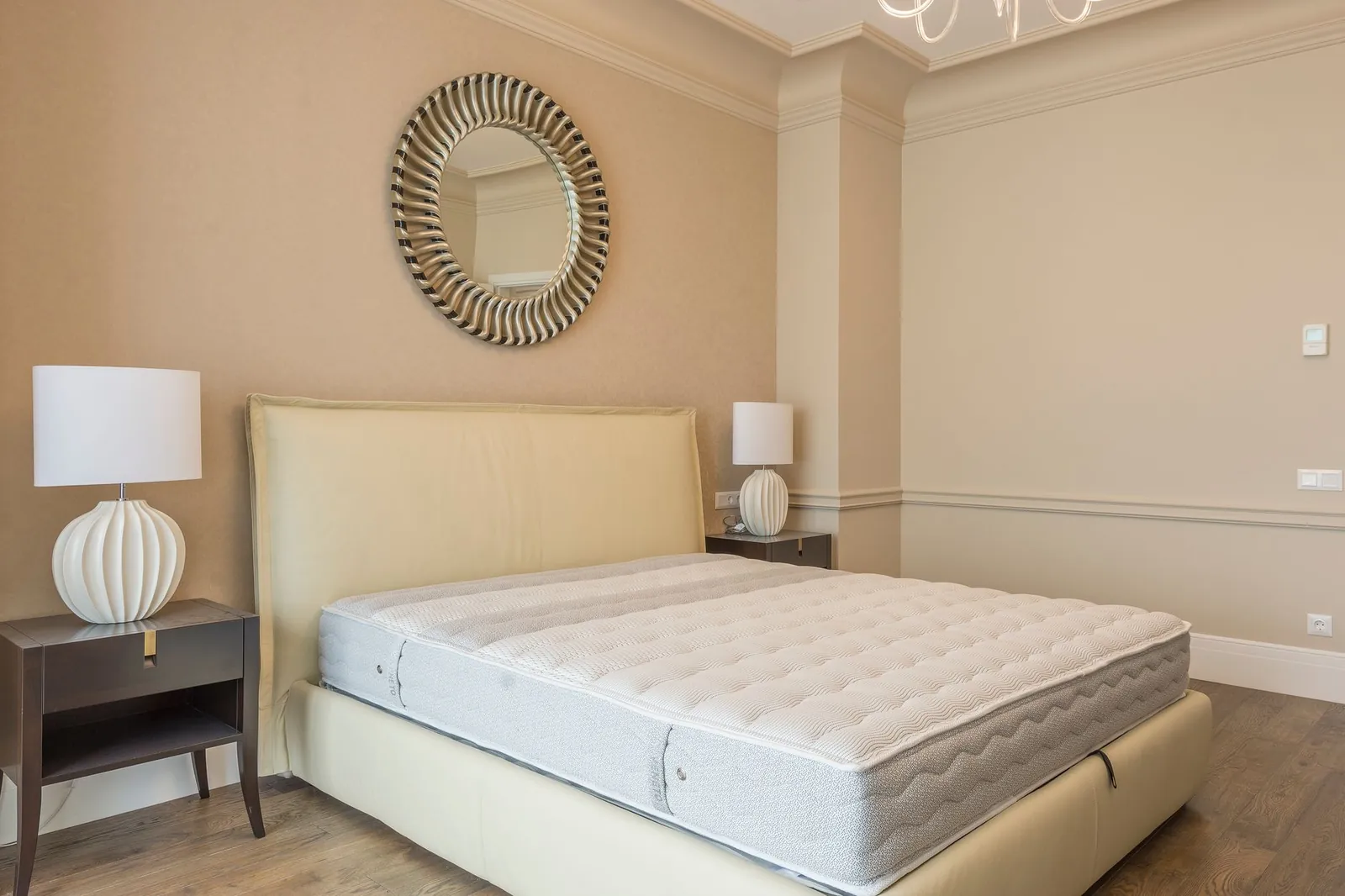
Memory foam is a viscoelastic material that softens with body heat and molds to your shape over roughly 5–10 seconds, then slowly rebounds when you move. Most models stack three layers: a memory foam comfort layer on top, a transitional polyfoam or gel-infused layer in the middle, and a high-density foam base. The base layer is where quality diverges—look for foam rated at 5+ pounds per cubic foot for longevity. At 3–4 lb/ft³, expect the mattress to soften and sag noticeably by year five.
The slow-response feel is the point: your hips and shoulders sink in just enough to keep your spine neutral, which is why side sleepers and people with chronic joint pain tend to prefer it. Motion absorption is a genuine advantage—a partner getting up at 3 a.m. on a quality memory foam mattress barely registers on your side. Queen prices run $400–$1,500.
Best for:
- Side sleepers (reduces shoulder and hip pressure)
- Couples (absorbs movement effectively)
- People with chronic pain or arthritis
- Hot sleepers willing to pay for gel-infused or open-cell foam
Common downsides:
- Traditional memory foam traps body heat; cooling variants cost $100–$300 more
- Off-gassing smell when new—typically fades in 48–72 hours, occasionally up to a week
- Slow response time makes it harder to change positions, which bothers some stomach sleepers
- The deep-sink feel reads as claustrophobic to some sleepers
How Spring Mattresses Work
Metal coils compress under your weight and push back immediately, giving springs their characteristic bounce. Coil type matters more than most shoppers realize. Bonnell coils (the hourglass-shaped original) are the cheapest and transfer the most motion across the mattress. Offset coils contour slightly better. Pocketed coils—each wrapped in its own fabric sleeve—move independently, which cuts motion transfer significantly and extends the coil’s working life. A queen with 600+ pocketed coils generally outperforms one with 400 Bonnell coils in both feel and durability. Queen prices run $300–$1,200.
Air circulates freely through the coil structure, which is why springs sleep cooler than foam by default—no engineering required. That breathability also makes them the safer pick if you run warm and don’t want to spend extra on cooling foam technology.
Best for:
- Stomach sleepers (responsive support prevents the hips from sinking too deep)
- Hot sleepers (passive airflow, no upgrades needed)
- Sleepers who prefer a bouncy, easy-to-move-on surface
- Budget shoppers—entry-level springs start around $300 for a queen
Common downsides:
- Bonnell and offset coils transfer motion; you feel a partner shifting
- Coils weaken and can creak after 5–7 years, especially under heavier sleepers
- Less contouring means more pressure on hips and shoulders for side sleepers
- Pocketed coils cost noticeably more than Bonnell—budget models often use the cheaper option
Side-by-Side Comparison
| Feature | Memory Foam | Spring |
|---|---|---|
| Pressure Relief | Excellent (molds to body) | Good (depends on coil type) |
| Motion Isolation | Excellent | Poor to fair |
| Temperature | Tends to sleep hot | Sleeps cool |
| Responsiveness | Slow (5–10 sec to rebound) | Fast (bounces immediately) |
| Durability | 7–10 years | 5–8 years (coils weaken) |
| Price Range (Queen) | $400–$1,500 | $300–$1,200 |
| Best For | Side sleepers, pain relief, couples | Stomach sleepers, hot sleepers |
| Off-Gassing | Yes (temporary) | Minimal |
Comfort and Feel
Memory foam keeps you in place—you sink into a cradled position, and the mattress holds you there. That’s ideal for pressure relief but means more effort to roll over. Springs do the opposite: the surface pushes back, so repositioning takes almost no effort. If you change positions frequently during the night, that responsiveness is a practical advantage, not just a preference.
The feel gap narrows considerably at the mid-range. A $700 pocketed-coil spring with a foam comfort layer and a $700 gel memory foam mattress are closer in feel than their base descriptions suggest. The clearest difference remains motion transfer—springs pass movement across the surface in a way that foam simply doesn’t.
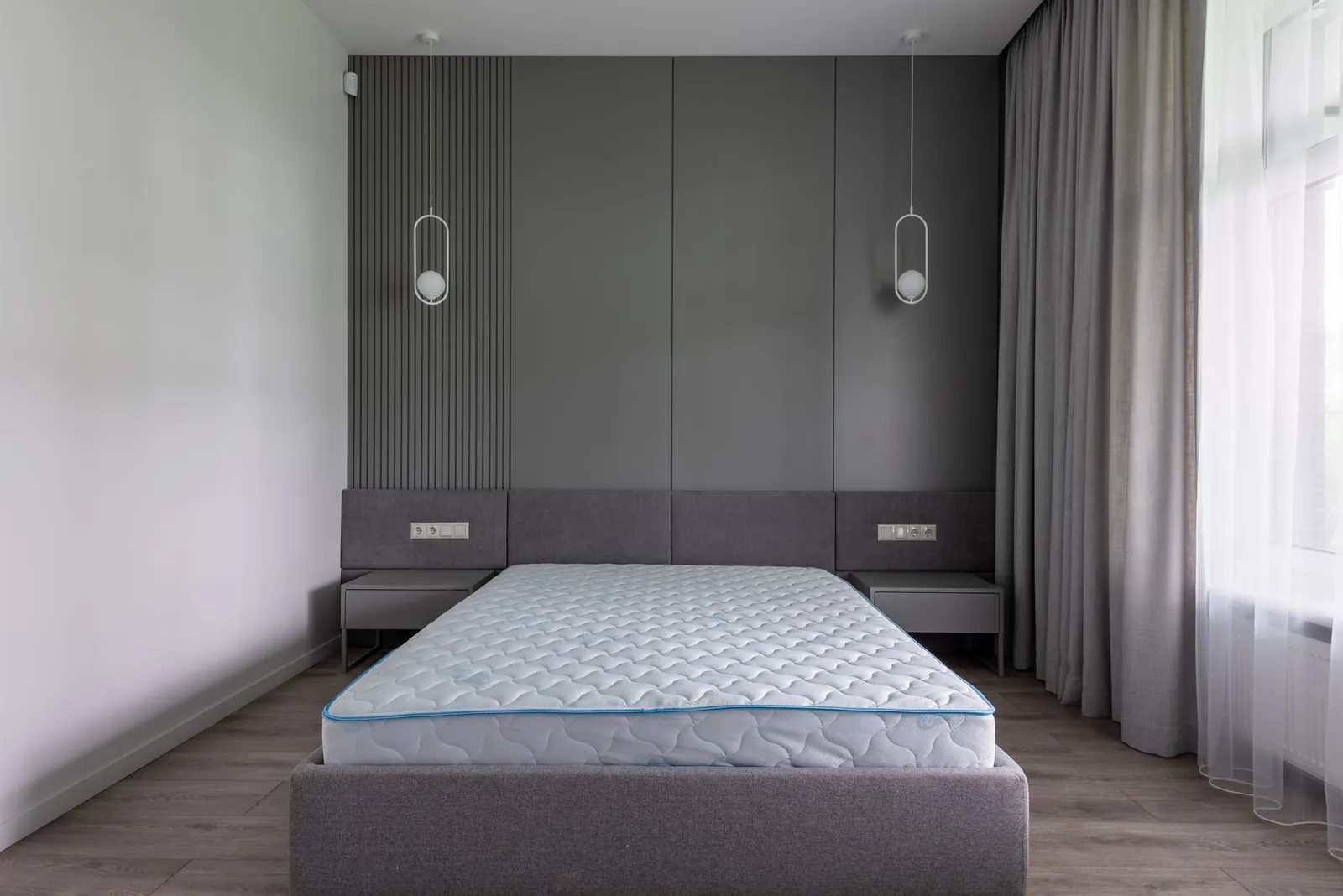
If you share the bed with a restless sleeper, memory foam’s motion isolation is worth the price premium. A Bonnell-coil spring will wake you every time your partner shifts.
Temperature and Cooling
Traditional memory foam traps heat because the dense material has nowhere to dissipate it. Gel-infused, open-cell, and copper-infused variants are engineered to sleep cooler—and they do work, though none fully match the passive airflow of a spring. Budget $100–$300 extra for a cooling memory foam variant, or $80–$250 for a cooling gel topper if you already own a foam mattress.
Springs breathe without any added cost. If you consistently wake up sweating and budget is a constraint, a mid-range spring is the more practical fix than a budget foam with a cooling topper layered on top.
Durability and Lifespan
High-density memory foam (5+ lb/ft³) reliably hits 7–10 years. Low-density foam (3–4 lb/ft³)—common in budget models under $500—often softens and sags within four to five years. The foam density is usually listed in the product specs; if it isn’t, treat that as a red flag.
Spring mattresses average 5–8 years. Coils weaken gradually under repeated compression, and heavier sleepers accelerate that timeline. Rotating a spring mattress 180 degrees every three to six months distributes wear more evenly and can add a year or two to its life. Pocketed coils outlast Bonnell because each coil bears weight independently rather than as a linked system.
Plan to replace either type every 7–10 years. For tips on stretching your budget across that cycle, see our mattress buying guide for budget shoppers.
Price and Value
Springs have a lower floor ($300 queen entry-level vs. $400 for foam), but mid-range options for both types cluster between $600 and $900. The value question is really about fit: a $600 spring that matches your sleep style beats a $900 foam that doesn’t.
Black Friday, Labor Day, and Memorial Day consistently deliver 20–40% off from major mattress brands. If your current mattress is functional but aging, those windows are worth timing a purchase around.
Our verdict
Choose memory foam if you’re a side sleeper, share the bed, or deal with chronic joint pain—the pressure relief and motion isolation are genuinely better. Choose springs if you sleep hot, prefer a bouncy surface, or sleep on your stomach and want to pay less upfront. Can’t commit to either? A hybrid—memory foam comfort layer over pocketed coils—splits the difference cleanly. Expect to pay $700–$1,400 for a queen hybrid.
Frequently asked questions
Is memory foam bad for your back?
No—memory foam distributes spinal load more evenly than springs, which is why it’s often recommended for back pain. The risk is buying too soft: if the mattress lets your hips sink below your shoulders, your spine curves out of alignment. Target medium-firm (rated 6–7 out of 10) with a support layer of at least 6 inches of high-density foam. Side sleepers with lower back pain tend to see the clearest benefit.
Do spring mattresses need flipping?
Most modern spring mattresses are one-sided and shouldn’t be flipped—the comfort layers are only on top. Rotating 180 degrees every 3–6 months is the right move; it evens out wear on the coils and extends the mattress’s useful life. Memory foam mattresses should never be flipped.
How long does memory foam off-gassing last?
Typically 48–72 hours with the mattress in a well-ventilated room. Some people notice a faint smell for up to a week. The odor comes from volatile organic compounds (VOCs) released during manufacturing—unpleasant but not harmful at normal exposure levels. Budget brands tend to off-gas more noticeably than premium ones, partly due to lower-grade foam formulations.
Can you use a mattress topper to fix temperature issues?
Yes, with realistic expectations. A cooling gel topper ($80–$250) reduces surface heat on a memory foam mattress and can make a meaningful difference for mild heat retention. It won’t fully replicate the passive airflow of a spring, but it’s far cheaper than replacing the mattress. Toppers typically last 3–5 years. Adding a topper to a spring mattress won’t improve cooling—springs are already breathable—but a topper can add softness if the surface feels too firm.
Which mattress type is better for couples?
Memory foam, and it’s not close—especially if one partner moves frequently or gets up during the night. Bonnell-coil springs transfer motion across the entire surface; you’ll feel every shift. Pocketed-coil springs are better but still don’t match foam’s isolation. If motion transfer is your primary concern, prioritize memory foam or a hybrid with pocketed coils over any Bonnell-coil design.

Priya covers deals and buying timing, and keeps a spreadsheet of price histories she is slightly embarrassed by.