This article may contain affiliate links. If you buy through them we may earn a commission at no extra cost to you.
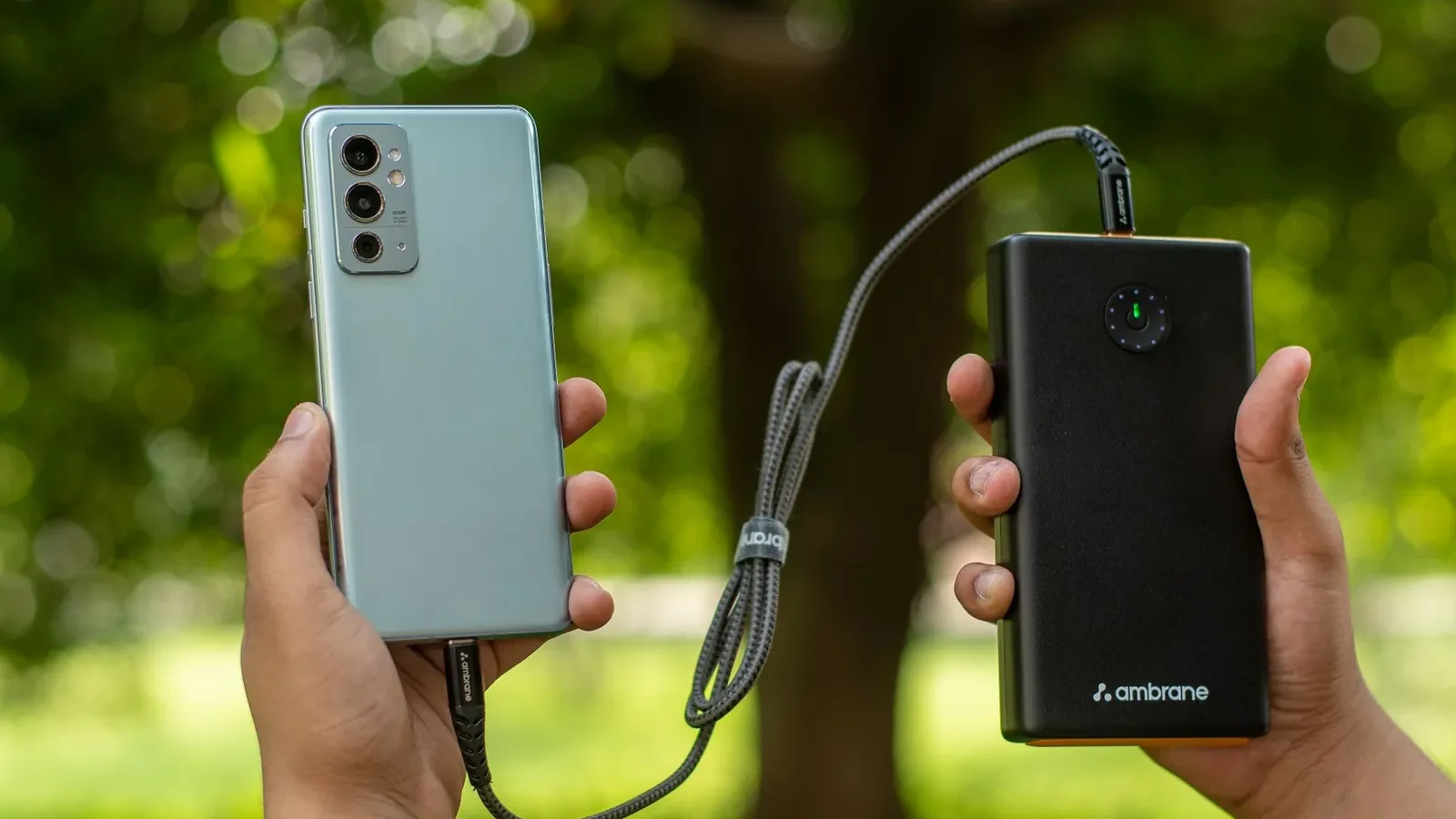
A 20,000 mAh power bank will not charge your phone 20 times—or even 10. After conversion losses, a realistic figure for a standard smartphone is 4–6 full charges. The gap between the label and your lived experience comes down to three things: how mAh and Wh relate to each other, how much energy is lost as heat during charging, and how manufacturers choose to present their specs.
What mAh and Wh Actually Mean
Power banks list capacity in milliamp-hours (mAh) and sometimes watt-hours (Wh). These aren’t two ways of saying the same thing. mAh measures electrical charge; Wh measures energy. Wh is the more useful number for predicting real charging performance, because it accounts for voltage—which mAh alone doesn’t.
A 20,000 mAh power bank running at 3.7V (standard lithium cell voltage) stores roughly 74 Wh. When a manufacturer lists only mAh, the voltage is implied but hidden—and it can vary by chemistry and design, which makes cross-brand mAh comparisons unreliable.
Why Wh matters more
Your phone’s battery is also rated in Wh at a specific voltage. The iPhone 15 has a 3,349 mAh battery at 3.85V, which equals about 12.9 Wh. A 74 Wh power bank can theoretically deliver 5.7 charges to that phone—but conversion losses bring the real number to 4–5. Wh gives you a common unit to do that math; mAh alone doesn’t.
Understanding Conversion Losses
No power bank delivers 100% of its stored energy to your device. The battery stores energy at 3.7V; your phone’s charging port expects 5V for standard USB, or 9–20V for fast charging. Converting between those voltages generates heat, and that heat is wasted energy.
A typical power bank loses 15–30% of its energy in conversion. That 74 Wh model might deliver only 50–63 Wh to your phone. A manufacturer claiming “20 full charges” is either benchmarking against a 2,000 mAh phone or ignoring losses entirely—sometimes both.
Factors that increase losses
- Fast-charging protocols: Higher output voltages (9V, 12V) mean a bigger step-up from the cell’s 3.7V, which costs more energy. Fast-charging power banks typically lose 20–30%; standard 5V output loses 10–15%.
- Cable quality: A cheap or long cable adds resistance. The energy goes into warming the cable, not your phone.
- Simultaneous charging and discharging: Running power into the bank while drawing power out pushes losses above 30% on most models.
- Temperature: Below 0°C or above 40°C, lithium cells deliver noticeably less usable capacity—sometimes 10–20% less.
How to Calculate Real Charges
Use this formula to estimate how many full charges you’ll actually get:
Real charges = (Power bank Wh × 0.85) ÷ Phone battery Wh
The 0.85 factor reflects a realistic 15% conversion loss on a decent-quality power bank. If the power bank only lists mAh, convert it: multiply mAh by the cell voltage (3.7V for most lithium-ion packs) and divide by 1,000. Your phone’s Wh is usually in the spec sheet or on the battery itself.
Example calculation
A 20,000 mAh power bank (74 Wh) charging an iPhone 15 (~12.9 Wh):
- Usable energy: 74 Wh × 0.85 = 62.9 Wh
- Charges: 62.9 ÷ 12.9 = 4.9 full charges
Drop to fast charging or use it in winter, and you’re looking at 4 charges, maybe fewer.
Capacity Ratings: What Manufacturers Actually Measure
Two 20,000 mAh power banks from different brands can perform very differently, because “20,000 mAh” doesn’t mean the same thing across the industry.
Typical vs. minimum capacity
Typical capacity is measured at room temperature, slow discharge, and a controlled test voltage—ideal lab conditions. That’s the number on the box. Minimum capacity is the worst-case floor, usually 5–10% lower. Reputable brands publish both; budget brands advertise only the higher number.
Rated at different voltages
Some power banks list mAh at the cell’s nominal 3.7V; others list it at the USB output voltage of 5V. A 20,000 mAh rating at 5V represents more stored energy than a 20,000 mAh rating at 3.7V—but the box won’t tell you which one you’re looking at. The fix: always compare Wh, not mAh, when shopping across brands.

Capacity vs. Real-World Performance
A larger number isn’t a guaranteed win. A well-engineered 15,000 mAh power bank with 90% conversion efficiency and 18W output can outdeliver a cheap 20,000 mAh model running at 5W and 78% efficiency—both in speed and in total energy transferred.
When you’re comparing models, prioritize Wh over mAh, check the output wattage (W = V × A), and look for independent reviews that report actual charge counts rather than repeating the manufacturer’s claim.
A power bank’s advertised charge count is almost always optimistic—real results depend on your phone’s battery size, the power bank’s efficiency, and how you use it.
Choosing the Right Capacity for Your Needs
The right size depends on your phone’s battery and how many days between top-ups you’re planning for.
Small phones (under 3,000 mAh)
A 10,000 mAh power bank (37 Wh) delivers 3–4 full charges. It fits in a jacket pocket and weighs around 180–220g—a reasonable day-trip backup.
Standard phones (3,000–4,000 mAh)
A 20,000 mAh power bank (74 Wh) hits 4–6 charges. For most people, that’s 2–3 days without hunting for an outlet, in a package that still fits a bag side pocket.
Large phones or multiple devices (4,000+ mAh)
A 25,000–30,000 mAh power bank (93–111 Wh) handles frequent or simultaneous charging. One hard limit: airlines typically restrict carry-on batteries to 100 Wh. A 27,000 mAh pack often sits right at that line—check the Wh rating before you pack it.
For help narrowing down a specific model, see our guide to how to choose a portable phone charger, which covers ports, fast-charging compatibility, and form factor alongside capacity.
Reading the Fine Print
Spec sheets bury the details that actually matter. Before you buy, find these:
- Wh or energy rating: Present on quality power banks; absent on most budget models. If it’s missing, do the mAh-to-Wh conversion yourself.
- Output voltage and amperage: Higher wattage means faster charging and, on good hardware, better efficiency. A 5W output on a 20,000 mAh bank is a red flag.
- Conversion efficiency: Some brands publish this; 85–90% is a reasonable benchmark. Below 80% is poor.
- Typical vs. minimum capacity: A gap larger than 5–10% suggests the typical figure is marketing, not engineering.
- Operating temperature range: Anything rated only to 0°C will underperform in a cold car or on a ski trip.
If a listing shows only mAh, no Wh, and claims “up to 10 full charges” with no phone model cited, expect real performance to fall well short. For picks that have been tested against those claims, see our roundup of the best portable phone chargers with fast charging.
Frequently asked questions
Why does my power bank charge my phone fewer times than advertised?
Conversion losses (typically 15–30%) reduce usable energy, and manufacturers often base their claims on smaller phones or ideal lab conditions. A 20,000 mAh power bank advertised as “10 charges” assumes roughly a 2,000 mAh phone; if yours is 3,500 mAh, you’ll get 5–6 charges instead.
Is a higher mAh always better?
No. A 15,000 mAh power bank with 18W output and 90% efficiency will outperform a 20,000 mAh model with 5W output and 80% efficiency—in both speed and total energy delivered. Check Wh, output wattage, and real-world reviews, not just mAh.
Can I bring a 20,000 mAh power bank on a plane?
Most airlines allow power banks up to 100 Wh in carry-on luggage only—not checked bags. A standard 20,000 mAh power bank at 3.7V is about 74 Wh, so it clears that limit. Anything over 100 Wh is typically banned outright. Check your airline’s policy and the power bank’s Wh label before you travel.
What’s the difference between a power bank’s input and output capacity?
Output capacity is what reaches your phone; input capacity is what flows into the power bank from a wall charger. Output is always lower due to conversion losses. When comparing models, focus on output capacity and real-world charge counts from independent reviews, not input specs.
Do fast-charging power banks lose more energy?
Yes. Fast charging uses higher voltages (9V, 12V, or above), which increases conversion losses to 20–30% compared to 10–15% for standard 5V output. You gain speed but give up some overall efficiency—a worthwhile trade-off for most people, but worth knowing when calculating expected charge counts.

Priya covers deals and buying timing, and keeps a spreadsheet of price histories she is slightly embarrassed by.