This article may contain affiliate links. If you buy through them we may earn a commission at no extra cost to you.
SPF—Sun Protection Factor—measures how much longer UV radiation takes to redden your skin with sunscreen versus without it. If bare skin burns in 10 minutes, SPF 30 theoretically extends that to 300 minutes. But that lab math assumes you apply the full recommended amount, and most people use roughly half, which drops effective protection significantly. SPF 50 is not twice as strong as SPF 25, and a higher number does not buy you more time between reapplications.
What SPF Actually Measures
SPF is a ratio, not a percentage, and it only covers UVB rays—the ones that cause sunburn. It tells you nothing about UVA exposure, which drives premature aging and contributes to skin cancer risk. That’s the job of the “broad spectrum” label. Skip broad spectrum and you could be wearing SPF 100 while still absorbing substantial UVA damage.
The ratio math is straightforward: SPF 30 means 30 times your unprotected burn time. The practical catch is application. Standard lab testing uses 2 mg of sunscreen per square centimeter of skin—about 1 ounce for a full body application. Apply half that amount and your SPF 30 performs closer to SPF 7–8 in real conditions.
The SPF Numbers: What They Actually Block
The numbers sound more different than they are:
- SPF 15 blocks about 93% of UVB rays
- SPF 30 blocks about 97% of UVB rays
- SPF 50 blocks about 98% of UVB rays
- SPF 70+ blocks about 99% of UVB rays
Going from SPF 15 to SPF 30 adds 4 percentage points of UVB protection. Going from SPF 50 to SPF 100 adds roughly 1 percentage point. The curve flattens fast, which is why dermatologists consistently land on SPF 30 for daily use and SPF 50 for extended outdoor exposure—not SPF 70 or higher.
The difference between SPF 30 and SPF 100 is smaller than the difference between SPF 15 and SPF 30—but reapplication matters more than the number.
SPF 30 vs. SPF 50: Which Do You Need?
SPF 30 for daily use
Commuting, running errands, working mostly indoors—SPF 30 broad spectrum handles all of it. At 97% UVB blockage, the gap between SPF 30 and SPF 50 is 1 percentage point, which is negligible for incidental sun exposure. SPF 30 is also easier to find in lightweight daily moisturizers and tends to be cheaper; most solid options land under $15. See our guide on best affordable sunscreen for daily use for specific picks.
SPF 50 for outdoor activities
Two or more hours outside—beach, trail, sports—warrants SPF 50 broad spectrum. That extra 1% of UVB blockage compounds over a long day, and SPF 50 is the standard for water-resistant formulas, which matter when you’re swimming or sweating through a workout. Water-resistant labels will specify either 40 or 80 minutes of protection in water; after that window, or after toweling off, reapply regardless of SPF.
SPF 70 and above
The FDA caps meaningful marketing claims at SPF 50+, because anything higher delivers less than 1% additional UVB protection. Higher-SPF products often require more chemical filters or heavier formulations to hit those numbers, which can mean a thicker feel or a greater chance of skin irritation—a real trade-off for a marginal gain.
Reapplication: The Variable That Outweighs SPF
Sunscreen breaks down from UV exposure, sweat, water, and friction at the same rate whether it’s SPF 30 or SPF 50. The number tells you protection level at full strength—not how long the product stays active. Reapply every 2 hours outdoors, and immediately after swimming or heavy sweating.
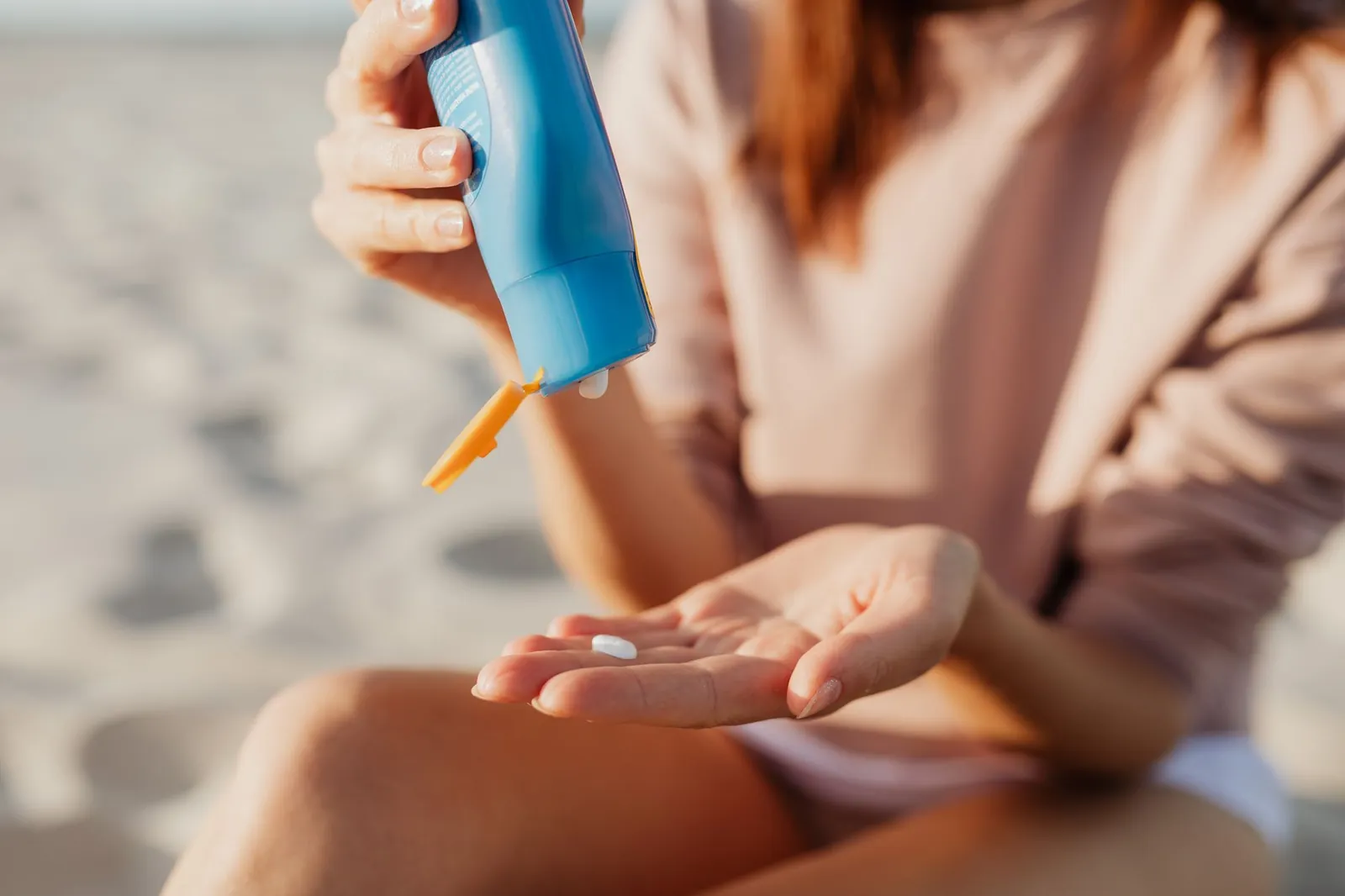
The amount matters as much as the timing. One ounce—roughly a shot glass—covers an adult body. Most people apply a quarter of that. If you’re using SPF 30 at half the recommended amount, your effective protection is closer to SPF 10–12. That’s a bigger gap than the difference between SPF 30 and SPF 50 at correct application.
Broad Spectrum: Why It Outranks the Number
“Broad spectrum” on the label means the formula protects against both UVB (burns) and UVA (aging, deeper skin damage). Without it, a high SPF number is incomplete protection.
Broad spectrum formulas use physical blockers—zinc oxide, titanium dioxide—or chemical filters like avobenzone and octocrylene, or a combination. Physical sunscreens sit on the skin surface and reflect UV; they tend to be thicker and can leave a white cast, but they’re less likely to irritate sensitive skin. Chemical sunscreens absorb UV and convert it to heat; they blend invisibly but occasionally trigger reactions in reactive or acne-prone skin. Both types work. Pick based on your skin and what you’ll actually use consistently.
Chemical vs. Physical Sunscreen: SPF Works the Same Way
A mineral SPF 30 and a chemical SPF 30 both block about 97% of UVB. The SPF number is type-agnostic. The practical differences come down to texture and skin compatibility:
- Physical (mineral): Thicker, potential white cast, gentler on sensitive skin, sits on the surface, reef-safe options available with zinc oxide
- Chemical: Lightweight, invisible finish, absorbs into skin, some filters (oxybenzone, octocrylene) can irritate sensitive or reactive skin
A chemical SPF 30 you apply correctly every day beats a mineral SPF 50 you skip because it feels heavy. For help matching formula to skin type, see our article on how to choose a sunscreen.
Frequently Asked Questions
Is SPF 30 enough for everyday use?
For most people, yes. SPF 30 blocks 97% of UVB and handles daily commuting, office work, and casual time outdoors. Upgrade to SPF 50 when you’re spending extended time in direct sun. Apply about 1 ounce for your whole body and reapply every 2 hours if you’re outside—those two habits matter more than chasing a higher number.
What’s the difference between SPF 50 and SPF 100?
SPF 50 blocks about 98% of UVB; SPF 100 blocks about 99%. That 1-point gap is negligible in real use, particularly since most people under-apply. The FDA limits claims to SPF 50+ on labels because higher numbers create a false sense of extended safety. SPF 50 is the practical ceiling for outdoor activities.
Does SPF 30 in a moisturizer give you enough protection?
Rarely, on its own. Moisturizer is applied in a much thinner layer than the 2 mg/cm² required to hit the labeled SPF. In practice, an SPF 30 moisturizer applied at typical amounts delivers closer to SPF 10–15. Use a dedicated sunscreen at the correct amount, or layer a separate sunscreen over your SPF moisturizer.
Can you mix SPF 15 and SPF 30 sunscreen and get SPF 45?
No. SPF doesn’t add up that way. Layering two sunscreens gives you the protection of whichever has the higher SPF—not the sum. It also makes it harder to control how much of each you’re actually applying. Use one sunscreen at the correct amount instead.
Is reef-safe sunscreen less effective?
No. Reef-safe formulas—those without oxybenzone and octinoxate—are typically mineral sunscreens with zinc oxide or titanium dioxide. They block UV rays just as effectively as chemical alternatives. The difference is environmental, not protective.

Priya covers deals and buying timing, and keeps a spreadsheet of price histories she is slightly embarrassed by.