This article may contain affiliate links. If you buy through them we may earn a commission at no extra cost to you.
Three decisions drive almost every earbud purchase: what you’ll use them for, how long they need to last between charges, and whether you can tolerate in-ear tips. Nail those first, and the rest—ANC, codecs, price tier—falls into place. No single model excels at everything, so knowing your trade-offs upfront saves you a return trip.
Sound Quality and Audio Performance
Frequency response (typically 20 Hz–20 kHz) tells you the range a pair can reproduce, but the tuning—how the manufacturer balances bass, mids, and treble within that range—is what you’ll actually hear. Bass-heavy tuning suits hip-hop and electronic; a flatter, more neutral profile serves podcasts and acoustic music better. Neither is objectively correct.
Active noise cancellation (ANC) uses onboard microphones to generate inverted audio waves that cancel ambient sound. Effective ANC starts around $100–$130; below that, most models either skip it or deliver weak attenuation that handles office hum but struggles on a subway. Passive isolation—how well the earbud physically seals your ear canal—costs nothing extra and matters just as much in moderate-noise environments.
Buy from retailers with 30–60 day return windows. Frequency response graphs and reviewer impressions are useful starting points, but your ear canal shape and sensitivity to bass affect what you actually hear.
Fit, Comfort, and Stability
A poor fit kills sound quality before you even touch the EQ. Most earbuds ship with small, medium, and large silicone tips; start with medium and swap if the seal feels loose or your ear aches after 30 minutes. Foam tips (sold separately for $10–$20, or bundled by brands like Jabra) compress to fill irregular canals and often improve both comfort and bass response noticeably.
Ear shape matters
Longer ear canals generally suit earbuds with deeper insertion; shallower canals do better with shorter nozzles. If you’ve returned multiple pairs for fit issues, look for brands that publish nozzle diameter specs or offer petite sizing—Sony and Jabra both do. Adjustable ear loops, common on fitness-focused models, add stability without requiring a deep fit.
Wearing style
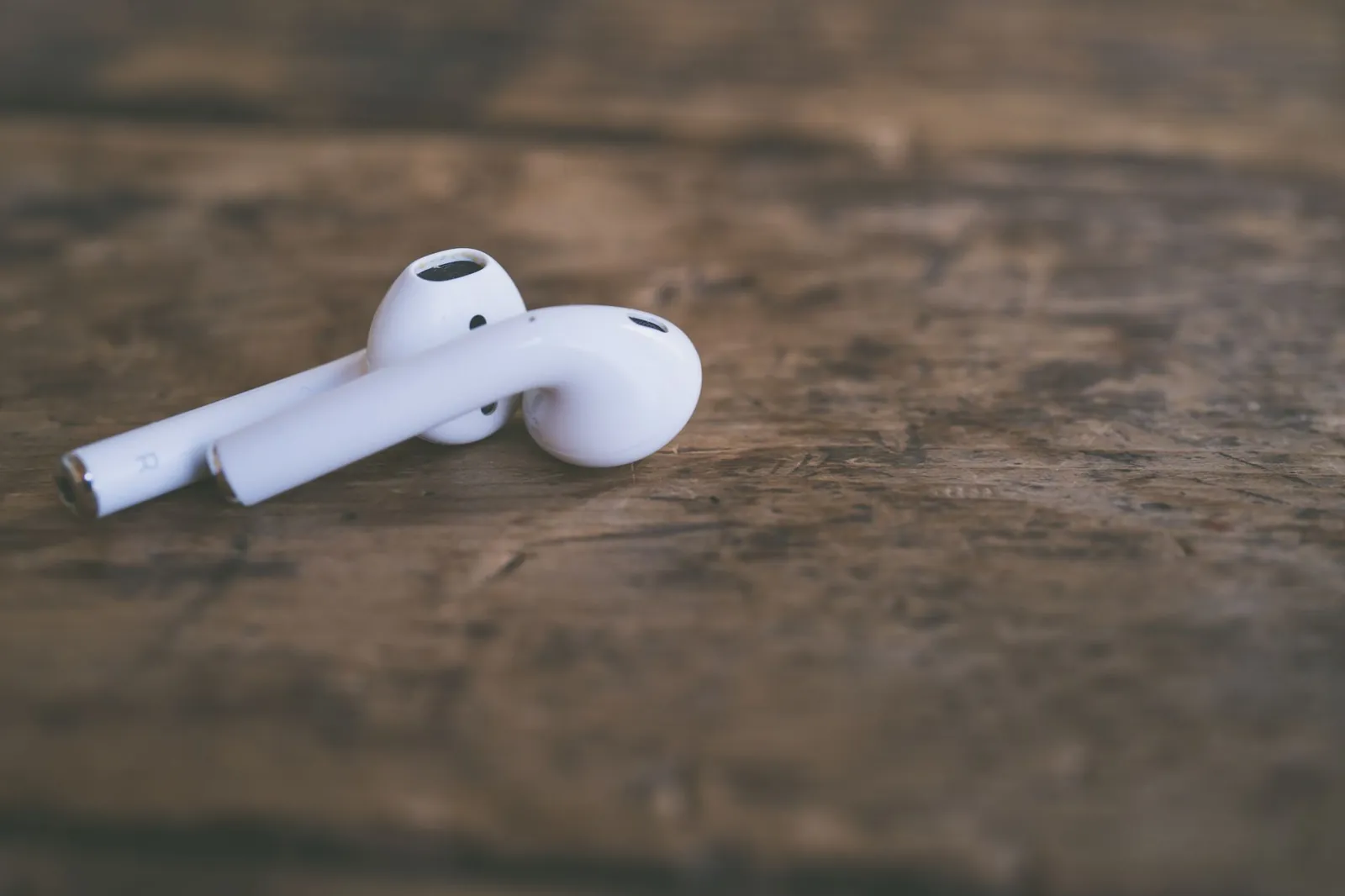
In-ear (canal) designs seal well and deliver better passive isolation but feel intrusive to some wearers over long sessions. Open-fit earbuds—like the Apple AirPods base model or Samsung Galaxy Buds FE—rest at the canal entrance, feel lighter, and let in ambient sound, which some people prefer for safety during outdoor runs. If you’re unsure which form factor suits you, our guide on wireless earbuds vs over-ear headphones covers the trade-offs in detail.
Battery Life and Charging
Battery specs appear as two numbers: per-charge playtime and total with the case. A rating of “6 hours + 24 hours” means 6 hours of listening before you drop them back in the case, which holds enough charge for four more full cycles. ANC enabled typically cuts per-charge playtime by 1–2 hours.
For a standard commute of 60–90 minutes each way, 6–8 hours per charge is plenty. Where it matters more is if you forget to charge the case—look for quick-charge support, where 10–15 minutes in the case yields 1–2 hours of playback. Wireless charging cases add $10–$30 to the price; worth it if you use a Qi pad already, unnecessary otherwise.
Battery capacity degrades with charge cycles. Most lithium-ion earbuds retain roughly 80% capacity after 300–500 full cycles—about 2–3 years of daily use. Replacement earbuds are available from some brands (Sony, Jabra) for $30–$60 per bud; others treat the pair as a disposable unit, so check parts availability before buying premium.
Connectivity and Compatibility
Bluetooth 5.0 and 5.2 are both reliable for everyday use—range runs 30–100 feet depending on walls and interference, and the latency difference between the two versions is imperceptible during music playback. Where latency actually matters is gaming and video calls; look for specs under 100 ms, or a dedicated low-latency mode, if that’s your use case.
Multi-device pairing
If you move between a phone, laptop, and tablet, check whether the earbuds support multipoint connection—staying paired to two devices simultaneously. Apple AirPods switch automatically across Apple devices via iCloud; most Android-focused earbuds require a manual tap or app switch. Neither is better; it depends on your ecosystem.
Codec support
Codecs compress audio for wireless transmission. SBC is the universal fallback; AAC is preferred on iPhones; aptX and LDAC deliver higher-resolution audio on compatible Android phones. The audible difference between SBC and LDAC is real but subtle—you’ll notice it more on lossless tracks through good speakers than on a bus with traffic noise around you.

Price and Value
| Price Range | Typical Features | Best For |
|---|---|---|
| $30–$80 | Basic ANC or none, 5–6 hour battery, standard fit | Casual listeners, budget-conscious buyers |
| $80–$150 | Good ANC, 6–8 hour battery, improved sound, app control | Daily commuters, most buyers |
| $150–$250 | Premium ANC, 8+ hour battery, wireless charging case | Frequent travelers, audio enthusiasts |
| $250+ | Flagship ANC, 10+ hour battery, premium build, spatial audio | Road warriors, audiophiles with specific needs |
The $80–$150 tier offers the sharpest value: you get functional ANC, reliable call quality, and app-based EQ without paying for features most listeners won’t use. Crossing $250 buys better materials and niche capabilities—spatial audio processing, advanced wind-noise reduction, longer manufacturer support—but the sound quality jump over a $150 model is modest. For deals at the low end, see our picks for best budget wireless earbuds under $50.
Durability and Water Resistance
IP ratings tell you exactly what a pair can handle. IPX4 resists sweat and light rain—sufficient for gym use. IPX5 handles heavy sweat and shower spray. IPX7 survives submersion up to 1 meter for 30 minutes, which matters for pool-deck use but is overkill for a treadmill session. The case rarely carries the same rating as the earbuds, so don’t submerge it.
Warranty length is a reliable proxy for build confidence: one year is standard, two years is good, and three years—offered by Jabra on select models—is exceptional. Plastic housings feel less premium but weigh less and absorb impact differently than metal; neither material guarantees longevity on its own.
The best earbuds are the ones you’ll actually wear every day—comfort and fit beat fancy features every time.
Microphone and Call Quality
Single-mic earbuds pick up background noise alongside your voice; dual-mic or beamforming setups isolate your voice more effectively in loud environments. Most earbuds in the $80–$150 range perform acceptably on calls indoors. If you take calls on windy streets or construction sites regularly, spend $150+ and look for wind-noise reduction specifically listed in the specs—not just “call quality” as a marketing bullet point.
Voice assistant support (Siri, Google Assistant, Alexa) is nearly universal now. The more useful differentiator is whether the companion app lets you remap the touch controls, since factory defaults rarely match how you actually use them.
Frequently asked questions
How long do wireless earbuds last before they die?
Most earbuds degrade noticeably after 2–4 years of daily use. Battery capacity typically drops to 70–80% of original after 300–500 charge cycles, and physical wear—damaged speaker drivers, stretched ear tips—compounds that. Some brands sell replacement earbuds or batteries for $30–$60 per bud; others don’t. Check parts availability before buying, especially at the premium tier.
Should I buy ANC if I mostly listen indoors?
Probably not. ANC earns its cost on planes, trains, and busy open-plan offices. In a quiet room or home environment, a snug passive seal handles most ambient noise without the added circuitry. Skipping ANC at the $80–$130 price point usually means better battery life or improved driver quality for the same money.
Can I use the same earbuds for workouts and office calls?
Yes, with the right spec combination. You need at least IPX4 water resistance, a secure fit (ear loops or wings help), and a dual-mic setup for call clarity. Many models in the $80–$150 range hit all three. Fitness-focused earbuds sometimes use bulkier housings that feel awkward during long calls, so read fit reviews specifically from desk workers, not just runners.
What’s the difference between Bluetooth 5.0 and 5.2?
Bluetooth 5.2 adds slightly lower power draw and better support for LE Audio, a newer codec standard that isn’t widely deployed yet. For streaming music and calls today, the real-world difference is negligible. Don’t pay a premium for 5.2 alone; it’s worth noting only if you’re buying for long-term compatibility with future devices.
Are expensive earbuds always better?
No—and the gap narrows fast above $150. A $120 pair often matches a $300 pair on sound quality for most listeners; what you’re paying for above that threshold is premium materials, longer software support, and specialized features like spatial audio or extreme ANC that don’t benefit everyone equally. Test before buying when you can, and prioritize fit over brand name.

Jordan has reviewed household and consumer products for eight years and returns more items than anyone should.