This article may contain affiliate links. If you buy through them we may earn a commission at no extra cost to you.
If you want the richest, most full-bodied cup and don’t mind five minutes of active brewing, get a French press. If you want coffee waiting for you when you wake up and prefer a cleaner taste, get an automatic drip maker. The two methods produce genuinely different results—not just in convenience, but in what ends up in your cup.
How They Brew Differently
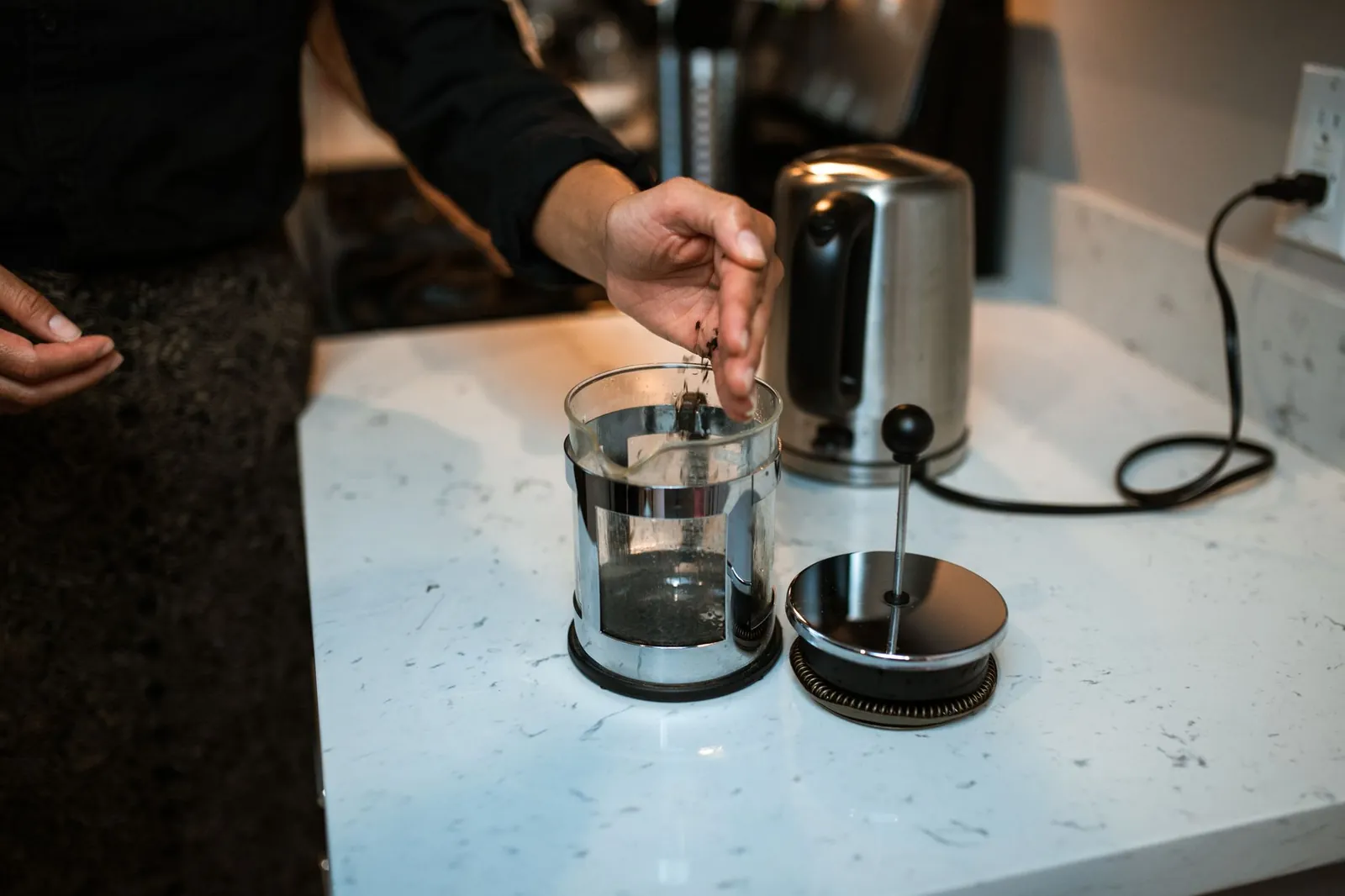
A French press is a manual immersion brewer. You add coarse grounds and hot water, steep for 3–4 minutes, then press a metal mesh filter down to separate grounds from liquid. Total active time: about 5 minutes, none of it hands-free.
An automatic drip maker heats water and drips it through a filter basket of medium-fine grounds. Press start and walk away. Most models finish in 5–10 minutes depending on carafe size and heating element wattage.
French presses extract more oils and sediment, creating a heavier body; drip makers produce a cleaner, brighter cup because the paper filter traps those oils.
Taste and Flavor Profile
French Press
The metal mesh filter lets coffee oils pass straight into your cup, which is why French press coffee tastes heavier and more textured than drip. Those oils carry aromatic compounds that paper filters absorb, so single-origin or specialty beans tend to show more complexity here. The trade-off is sediment at the bottom of every cup, and a steep longer than 4 minutes tips quickly into bitter, over-extracted territory.
Automatic Drip Coffee Maker
Paper filters trap oils and fine particles, producing a lighter mouthfeel and brighter acidity. The flavor is more forgiving—drip is harder to over-extract than immersion brewing—and it suits medium roasts and blends well. If sediment bothers you or you prefer a crisper, cleaner cup, drip is the right call.
Brewing Time and Convenience
French press brewing is fast but attentive. You heat water separately (a gooseneck kettle takes 3–4 minutes), pour, time the steep, and press. On a slow weekend morning that ritual is pleasant. At 6 a.m. on a Tuesday, it’s an extra cognitive load most people skip.
Drip makers are genuinely set-and-forget. Load grounds and water the night before, set the programmable timer, and coffee is ready before you’re out of bed. That single feature—available on most models above $50—is why drip makers dominate American kitchens.
For tight counters, see our guide to the best coffee makers for small kitchens.
Cost Breakdown
| Factor | French Press | Automatic Drip Maker |
|---|---|---|
| Upfront cost | $25–$60 | $40–$200+ |
| Replacement parts | Filter (metal, reusable) | Carafe, filter basket, heating element |
| Paper filters needed | No | Yes (ongoing cost) |
| Electricity cost | None (uses kettle) | Low (minimal energy use) |
| Long-term value | High (durable, few moving parts) | Medium (more components to fail) |
A French press costs $25–$60 once, then almost nothing—the metal filter lasts years. Daily drip brewing adds $3–$8 per month in paper filters, plus the higher upfront price of a quality machine. Over two years of daily use, a French press typically costs $40–$80 less in total. That said, a well-built drip maker like a Cuisinart or Breville often outlasts a cheap glass French press carafe, which breaks if dropped.

Cleanup and Maintenance
French Press
Knock the wet grounds into the trash or compost, rinse the carafe and mesh filter, dry. About 2–3 minutes. The mesh doesn’t trap grounds the way paper does, so a little residue always clings to the filter screen—a quick scrub with a bottle brush once a week keeps it clear. Glass carafes break; stainless steel models ($35–$60) solve that.
Automatic Drip Maker
Toss the used paper filter, rinse the carafe and basket—also 2–3 minutes daily. The difference is monthly maintenance: mineral buildup from hard water requires descaling with white vinegar or a commercial solution (Dezcal runs about $8 for several uses). Skip it and the machine brews slower and starts tasting metallic. French presses have no internal plumbing to scale up.
Space and Aesthetics
A 3-cup French press occupies roughly 4 inches of counter space. Most come in glass, stainless, or ceramic and look deliberate on a counter. A standard 12-cup drip maker needs 6–8 inches of width and depth, plus clearance above the water reservoir. If you’re working with a galley kitchen or minimal counter space, the French press is the practical choice—and it stores in a cabinet without issue.
Which Should You Choose?
Our verdict
Choose a French press if: you want the richest possible cup, brew one to two servings at a time, have a few unhurried minutes in the morning, or want to keep costs as low as possible. Best for coffee enthusiasts, small households, and minimalist kitchens.
Choose an automatic drip maker if: you brew for two or more people daily, want coffee ready on a timer, prefer a cleaner-tasting cup, or need zero morning effort. Best for busy households and anyone who values consistency over ritual.
Plenty of coffee drinkers own both—a French press for weekend mornings, a drip maker for weekday rushes. At $25–$60, a French press is a low-risk addition if you already have a drip maker.
Frequently asked questions
Can you use the same coffee grounds in both a French press and drip maker?
Not ideally. French presses need coarse grounds—roughly the texture of sea salt—to avoid clogging the mesh filter. Drip makers work best with medium grounds. Medium grounds in a French press will over-extract and taste bitter; coarse grounds in a drip maker will under-extract and taste thin and sour. If you only have one grind size, medium is the more forgiving compromise in a French press.
Is French press coffee bad for cholesterol?
French press coffee contains cafestol and kahweol, naturally occurring oils that can raise LDL cholesterol with regular consumption. Paper filters in drip makers remove most of these compounds. If you’re actively managing cholesterol levels, drip is the lower-risk option—though the actual impact depends on how many cups you drink per day and your overall diet. Check with your doctor if it’s a concern.
How long does coffee stay fresh in each brewer?
French press coffee cools fast in a glass carafe and tastes best within 20 minutes. Drip makers with warming plates hold temperature for 30–60 minutes, but the heat continues cooking the coffee, degrading flavor noticeably after about 20 minutes. A thermal carafe—standard on many mid-range drip makers—keeps coffee hot for 1–2 hours without the flavor penalty.
Can you make cold brew in a French press?
Yes. Add coarse grounds and cold water (a 1:4 grounds-to-water ratio is a reliable starting point), steep in the fridge for 12–24 hours, then press. You get a smooth, low-acid concentrate you dilute to taste. Drip makers require hot water to extract properly and can’t replicate this.
Which is better for travel or camping?
French press, without question. It needs only hot water and grounds—no outlet, no batteries, no fragile electronics. A stainless steel French press ($35–$55) handles drops and temperature swings that would destroy a drip maker’s carafe or heating element. For backpacking where weight matters, a collapsible pour-over funnel is even lighter, but a French press is the better all-around camp brewer.

Priya covers deals and buying timing, and keeps a spreadsheet of price histories she is slightly embarrassed by.