
This article may contain affiliate links. If you buy through them we may earn a commission at no extra cost to you.
Non-stick cookware loses its slickness when scratched, overheated, or cleaned with abrasive tools. The fix is straightforward: keep heat at medium or below, hand-wash with a soft sponge, and cushion pans when you stack them. Do those three things consistently and a quality pan will last 3–5 years; skip them and a budget pan can fail in under 12 months.
Use Low to Medium Heat Only
Most non-stick coatings—both PTFE (Teflon-style) and ceramic—perform best between 200°F and 400°F. Many manufacturers void warranties above 500°F, and PTFE begins to off-gas at around 570°F. For everyday eggs, fish, and sautéed vegetables, medium-low is plenty. Save high-heat searing for stainless steel or cast iron, which are built for it.
Preheat for no more than 1–2 minutes before adding oil or food. A quick water-drop test tells you when it’s ready: a droplet should skitter across the surface, not sit still. Heating an empty pan on high for even 5 minutes causes uneven coating damage that no amount of careful washing will reverse.
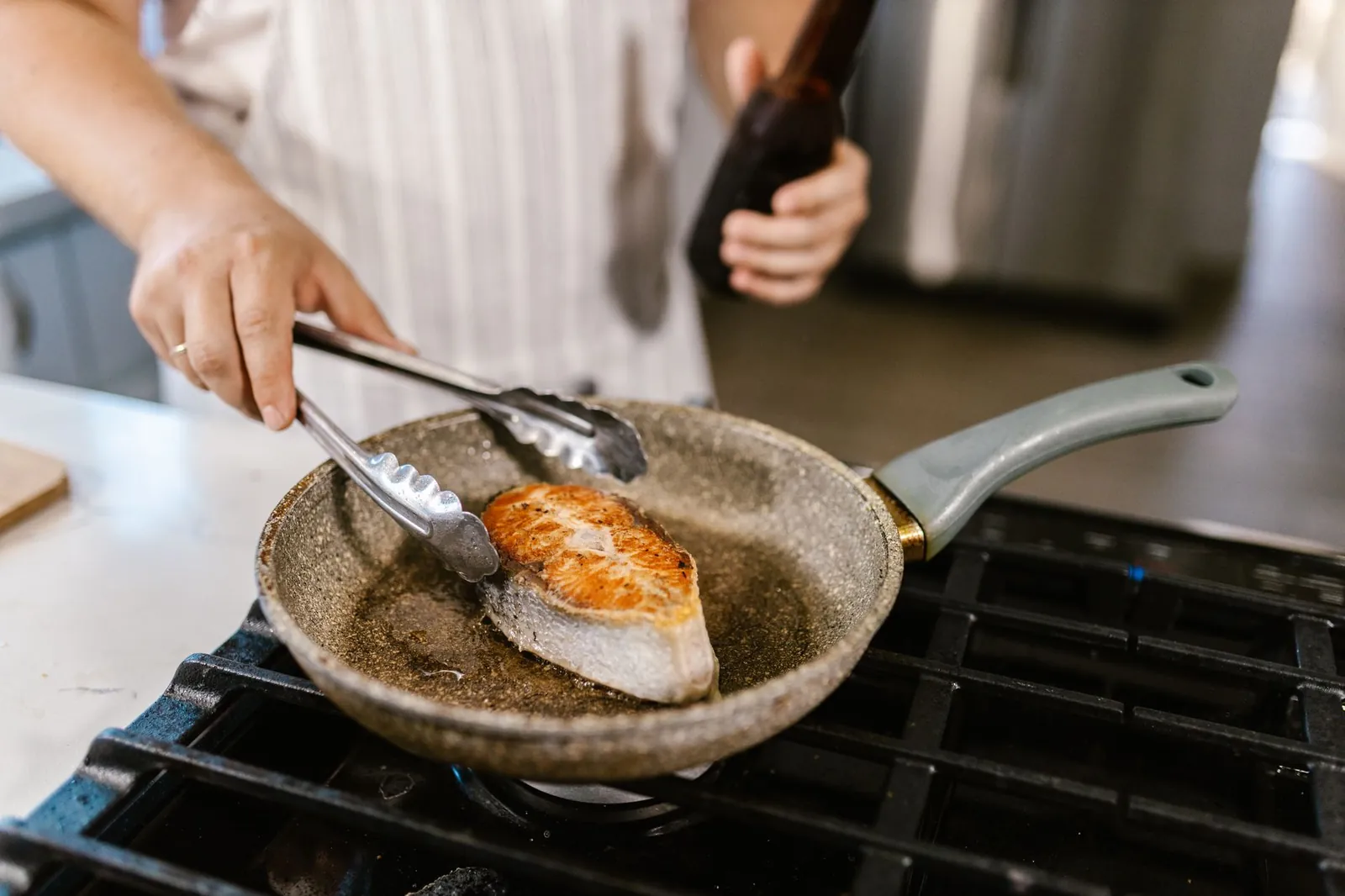
Hand-Wash With Soft Sponges and Mild Soap
Dishwashers combine high heat, caustic detergent, and vibrating metal racks—each one a separate threat to the coating. Hand-washing takes 90 seconds and is the single highest-return habit you can build.
Step-by-step washing routine
- Let the pan cool for 2–3 minutes after cooking. Thermal shock from cold water on a hot pan can warp the base.
- Rinse under warm water to loosen food particles.
- Apply a drop or two of dish soap to a soft sponge or microfiber cloth.
- Wipe the cooking surface in circular motions with light pressure.
- Rinse thoroughly and dry immediately with a soft towel to prevent water spots.
Never use steel wool or scouring pads. Even products labeled “non-scratch” can wear the coating if you scrub hard. For stuck-on food, soak for 5–10 minutes in warm soapy water, then wipe gently—the residue will release without force.
Avoid Metal Utensils and Sharp Objects
Metal utensils create bare spots where food will stick and the coating will eventually flake. Silicone, wood, and heat-safe plastic are your options.
Safe utensil choices
- Silicone: Heat-resistant to around 600°F, flexible, and reliably scratch-free. Best all-around choice ($4–$12 per utensil).
- Wood: Affordable ($2–$8) and gentle, but absorbs moisture over time and can eventually splinter if not dried properly.
- Plastic: Budget-friendly ($1–$4), but cheaper plastics warp above 400°F—check the label before buying.
Ceramic-coated utensils can still scratch if you use them with force. The goal is gentle contact: let the food cook rather than constantly stirring or pressing it down.
Store Pans Properly to Prevent Scratches
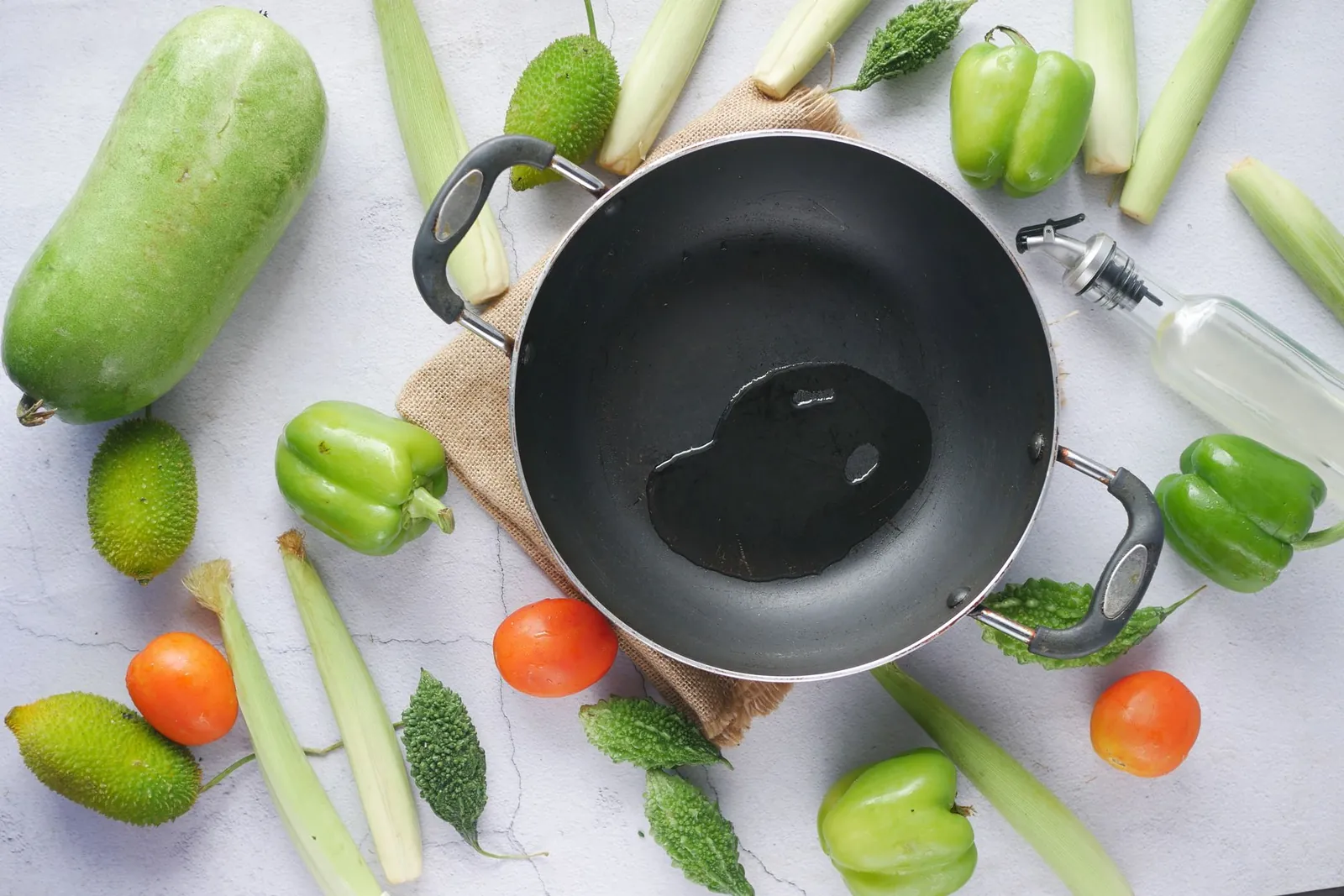
Stacking bare pans directly on top of each other lets the hard exterior bottom of one pan grind against the coated interior of the pan below. Over months, this does as much damage as using a metal spatula.
Storage best practices
- Use pan separators or soft cloths: A thin cloth, paper towel, or silicone mat between pans creates a protective barrier. Dedicated separators run $5–$15 for a set.
- Hang pans on a rack: A wall-mounted or overhead rack keeps pans accessible without stacking. Expect to spend $20–$60 for a sturdy option.
- Store lids separately: Lids shift during storage and can scratch the cooking surface; a lid organizer or separate shelf fixes this.
- Keep in a dry cabinet: Moisture trapped under stacked pans promotes rust on the base and accelerates coating breakdown at the edges.
Store non-stick pans flat or use separators between layers—stacking bare surfaces against each other erases the coating faster than years of cooking.
Season Your Non-Stick Pan Occasionally
Non-stick pans don’t need seasoning the way cast iron does, but a light oil wipe after washing can extend the life of an aging surface. On a pan that’s lost some of its original slickness, it’s worth trying before you replace it.
After washing and drying completely, put a few drops of neutral oil—canola, vegetable, or refined coconut—on a paper towel and wipe the cooking surface lightly. Wipe away any excess so the pan doesn’t feel greasy going into the cabinet. Monthly is enough for a pan you use daily; quarterly works for occasional use.
Know When to Replace Your Pan
Quality non-stick pans last 3–5 years with regular use; budget pans often fail in 1–2 years regardless of care. Knowing the difference between normal wear and a pan that needs to go saves you from cooking on a degraded surface.
Signs it’s time to replace
- Food sticks consistently even with adequate oil and proper heat.
- The coating is visibly flaking or peeling into food.
- Scratches or bare spots are spreading across the surface.
- The pan is warped and no longer sits flat on the burner.
If you’re shopping for a replacement, our guide to budget non-stick cookware sets covers affordable options across price tiers. If you’re weighing a longer-term switch, see how non-stick compares to stainless steel for different cooking styles.
Common Mistakes to Avoid
- Cooking at high heat: Temperatures above 500°F permanently damage both PTFE and ceramic coatings.
- Using aerosol cooking sprays: They leave a sticky residue that bonds to the surface and is nearly impossible to remove without scrubbing—which causes its own damage. Use butter or poured oil instead.
- Preheating an empty pan on high: Five minutes without food or liquid is enough to cause uneven, irreversible coating damage.
- Putting it in the dishwasher: Even pans labeled “dishwasher-safe” degrade faster with machine washing.
- Storing wet: Moisture trapped between stacked pans corrodes the base and weakens the coating from the edges inward.
Frequently asked questions
Can I use non-stick pans in the oven?
Most non-stick pans are oven-safe to 350°F–400°F, but the limit depends on the manufacturer and the handle material. Check the bottom stamp or the manual for your specific pan. Avoid broiling—direct radiant heat spikes well above 500°F even on a low broil setting. Always use oven mitts; non-stick handles heat up faster than cast iron or stainless.
Is it safe to cook with a scratched non-stick pan?
Minor surface scratches won’t hurt you, but they accelerate coating breakdown. If the coating is visibly flaking or peeling, stop using the pan—flakes can end up in your food. That’s the line between cosmetic wear and a pan that needs replacing.
What’s the best way to clean burnt-on food?
Fill the pan with warm water and a drop of dish soap and soak for 10–15 minutes. Wipe gently with a soft sponge. For stubborn spots, apply a paste of baking soda and water with a soft cloth and let it sit for five minutes before wiping. Avoid vinegar—regular use can degrade the coating over time.
Should I oil the pan every time I cook?
Non-stick surfaces release food without much fat, but about ½ teaspoon of butter or poured oil improves both release and flavor. Avoid aerosol sprays—they leave a residue buildup that dulls the coating after repeated use.
Can I use non-stick pans on a glass stovetop?
Yes. Make sure the pan bottom is clean and completely flat—any debris or warping can scratch the glass surface. Lift the pan to reposition it rather than sliding it across the cooktop.

Priya covers deals and buying timing, and keeps a spreadsheet of price histories she is slightly embarrassed by.


