This article may contain affiliate links. If you buy through them we may earn a commission at no extra cost to you.
Add coarse-ground coffee to your French press, pour 195–205°F water over it, wait four minutes, and press. That’s the whole method. The details below—ratio, grind size, when to stir—are what separate a flat, gritty cup from a clean, full-bodied one.
What You Need
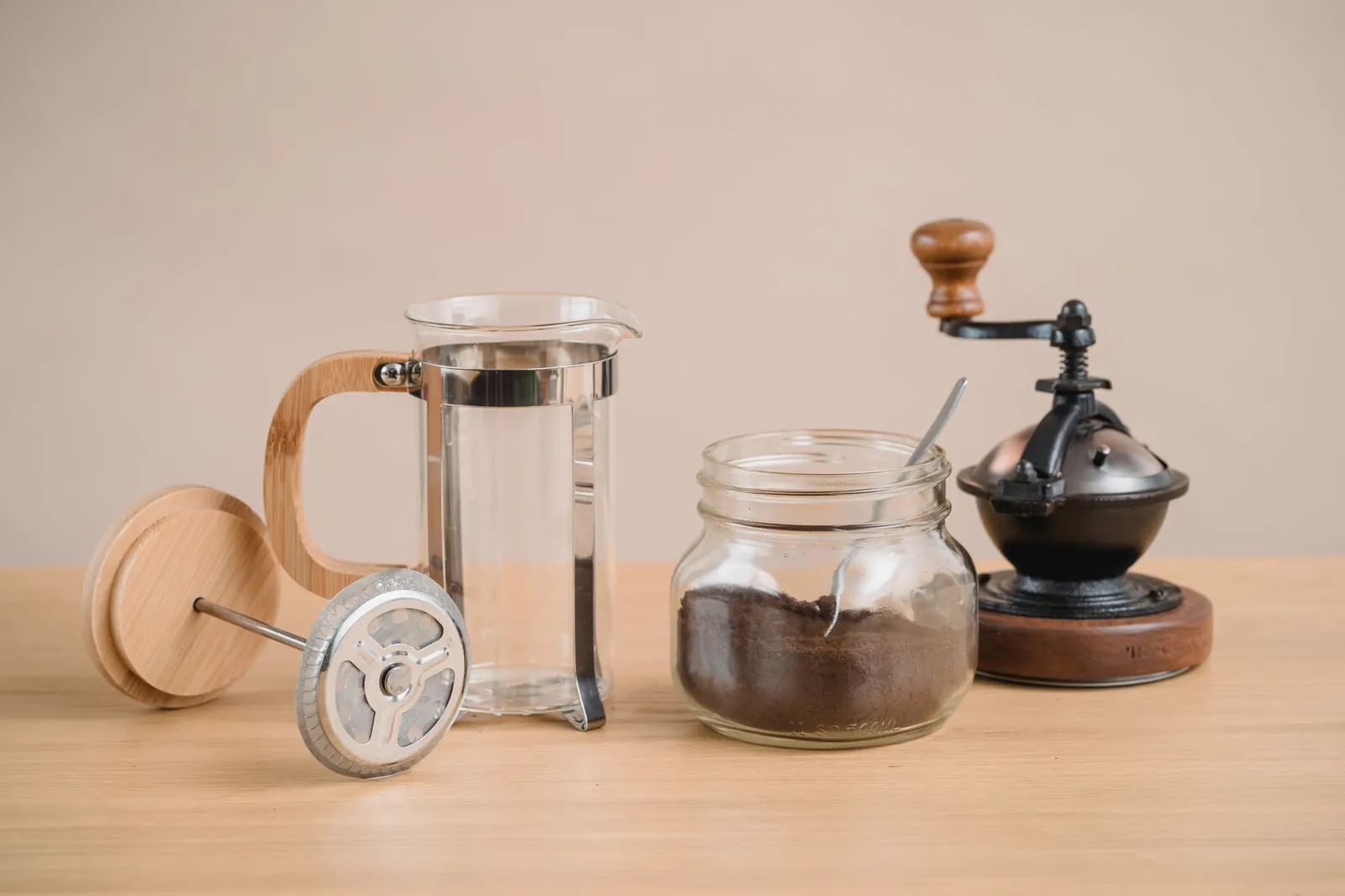
Before you start, gather these essentials:
- French press (34 oz / 1 liter is the standard size for 3–4 cups)
- Whole coffee beans (freshly roasted, within 2–4 weeks of roast date)
- Burr grinder (blade grinders produce uneven particle sizes and muddy coffee)
- Kettle (ideally temperature-controlled or gooseneck)
- Scale (optional but worth it—ratios by weight beat ratios by scoop)
- Timer (your phone works fine)
- Spoon (for stirring and skimming)
A standard coffee scoop holds about 0.5 oz (14 g) of beans if you’re skipping the scale. The steep is timed, not eyeballed, so a timer is the one tool you shouldn’t skip.
The Coffee-to-Water Ratio
Use a 1:15 ratio by weight—1 gram of coffee for every 15 grams of water. For common press sizes:
- 34 oz (1 liter): 65 g coffee to 975 g water — about 3–4 cups
- 12 oz (350 ml): 23 g coffee to 345 g water — 1–2 cups
- 50 oz (1.5 liter): 100 g coffee to 1,500 g water — 5–6 cups
Measuring by scoops? One scoop (14 g) per 8 oz of water gets you close enough for daily brewing, though it runs slightly stronger than 1:15.
Coarse grounds and a full four-minute steep are what separate French press from other methods—don’t skip either.
Grind Size and Bean Selection
Why Coarse Matters
French press needs a coarse grind—think breadcrumbs or coarse sea salt, not powder. Fine grounds over-extract during the four-minute steep, producing bitter, gritty coffee. Coarse grounds extract more slowly and evenly, which is exactly what full-immersion brewing requires.
Choosing Beans
Beans roasted within the last 2–4 weeks produce noticeably more CO₂ during brewing, which improves extraction and flavor. Medium to dark roasts suit French press well—full immersion draws out body and chocolate or caramel notes. Light roasts work but taste sharper and more acidic in this method; choose based on what you actually like. Either way, buy whole beans and grind just before brewing. Pre-ground coffee oxidizes within days of opening.
Water Temperature and Quality
Target 195–205°F (90–96°C). Boiling water at 212°F scorches the grounds and pulls out harsh, bitter compounds. No thermometer? Boil your kettle and let it sit for 30 seconds—that drops the temperature into range.
If your tap water is heavily chlorinated or leaves mineral deposits in your kettle, use a filtered pitcher. You don’t need bottled water; a basic Brita-style filter removes the flavors that compete with your coffee.
Step-by-Step Brewing Instructions
Step 1: Heat and Rinse
Boil your water. While it heats, fill the French press with hot tap water and let it sit for 30 seconds to warm the glass—cold glass drops your brew temperature faster than you’d expect. Empty it and set the press on your scale.
Step 2: Add Grounds
Add coarse grounds to the warm, empty press. Tare your scale and add your target weight (65 g for a standard 34 oz press), or measure by scoop at one per 8 oz of water.
Step 3: Bloom (30 Seconds)
Pour just enough hot water to saturate the grounds—roughly twice their weight. For 65 g of coffee, that’s about 130 g of water. Start your timer. Let it sit for 30 seconds while CO₂ escapes; you’ll see the grounds bubble and rise. This bloom phase lets gas vent so water can extract evenly during the steep.
Step 4: Pour and Steep (3.5 Minutes)
Pour the remaining water in a slow, circular motion until you hit your target weight, or fill to about 1 inch below the rim. Stir gently to wet any dry grounds at the bottom. Set the lid on top—plunger up, not pressed—and wait 3.5 minutes.
Step 5: Break the Crust and Skim
At 3.5 minutes, a crust of grounds and foam sits on top. Stir it gently to break it up, then skim off floating grounds and foam with a spoon. This removes fine particles that otherwise make it through the filter and settle as grit in your cup.
Step 6: Press and Pour
Replace the lid and press the plunger down slowly over about 30 seconds. Steady, even pressure—don’t force it. Pour immediately. Grounds left sitting in the press keep extracting; coffee that sits five extra minutes tastes noticeably more bitter than coffee poured right away.
Common Mistakes and How to Fix Them
Muddy, Gritty Coffee
Grind is too fine, or you skipped skimming. Switch to a coarser setting and skim the crust before pressing. If grit persists, leave the last half-inch of coffee in the press when you pour.
Weak, Watery Coffee
Too little coffee, or grounds that are so coarse they’re not extracting properly. Weigh your coffee if you haven’t been. Check that your burr grinder is producing uniform coarse particles rather than a mix of sizes—inconsistent grind means uneven extraction.
Bitter Taste
Water too hot, steep too long, or grind too fine—often a combination. Drop water temperature to around 200°F, reduce steep time to 3 minutes, or go one step coarser on your grinder. Change one variable at a time so you know what fixed it.
Coffee Cools Too Quickly
Preheat your mug with hot water for 30 seconds before pouring. A cold ceramic mug drops coffee temperature by 10–15°F on contact.
French Press vs. Other Brewing Methods
French press produces richer, heavier-bodied coffee than drip because no paper filter strips out the oils. Drip machines win on hands-off convenience and batch consistency. For a full side-by-side, see our French press vs. coffee maker comparison. If counter space is a constraint, our guide to the best coffee makers for small kitchens covers compact alternatives.
Cleaning and Maintenance
Dump the grounds immediately after brewing—wet grounds left sitting accelerate oil buildup that makes future cups taste stale. Rinse the press with hot water and scrub the metal filter mesh with a small brush. Once a week, soak the mesh in hot soapy water for a few minutes, scrub, and rinse thoroughly.
Check the rubber plunger seal occasionally. A cracked or hardened seal lets coffee bypass the filter and leak around the plunger. Replacement seals run $5–10 from most French press brands and take about a minute to swap.
Frequently Asked Questions
Can I use pre-ground coffee in a French press?
Yes, but expect trade-offs. Pre-ground coffee is usually milled for drip machines—medium-fine—not the coarse grind French press needs. That mismatch produces over-extracted, muddy results. Pre-ground also oxidizes fast; flavor drops noticeably within a week of opening the bag. If you have no other option, buy the smallest bag available and use it within 5–7 days.
How long can I leave coffee steeping in a French press?
Four minutes is the ceiling. Past that, extraction keeps running and bitterness builds quickly. If you lose track of time, pour the coffee out immediately rather than letting it sit on the grounds.
What’s the difference between a 3-minute and 4-minute brew?
Three minutes produces lighter, brighter coffee with more acidity. Four minutes adds body and sweetness. Start at 3.5 minutes and adjust from there—coarser grinds benefit from the full four minutes; finer grinds can hit bitterness by 3.5.
Do I really need to skim the crust before pressing?
Not strictly, but it reduces grit in the final cup. If you skip it, pour slowly and stop before the last half-inch of coffee—that’s where most of the sediment collects.
Can I brew French press coffee with cold water?
No. Cold water won’t extract enough flavor in any practical timeframe—you need 195–205°F for proper extraction in four minutes. For cold coffee, use a separate vessel and steep coarse grounds in room-temperature or cold water for 12–24 hours. That’s cold brew, and it’s a different process entirely.

Jordan has reviewed household and consumer products for eight years and returns more items than anyone should.